
Community in Crisis
As Allis-Chalmers got work at its pilot plant in the old street car barns underway, the production workers held an election to choose a bargaining agent. A vote was held on January 18, 1952, in favor of the United Automobile, Aerospace, and Agricultural Implement Workers (UAW)–part of the larger Congress of Industrial Organizations (CIO)– over the American Federation of Labor (AFL) union. Local 1164 was established and elected Clyde Wheatfill to serve as the group’s president. Union leaders and company officials scheduled talks to negotiate a fair labor contract.
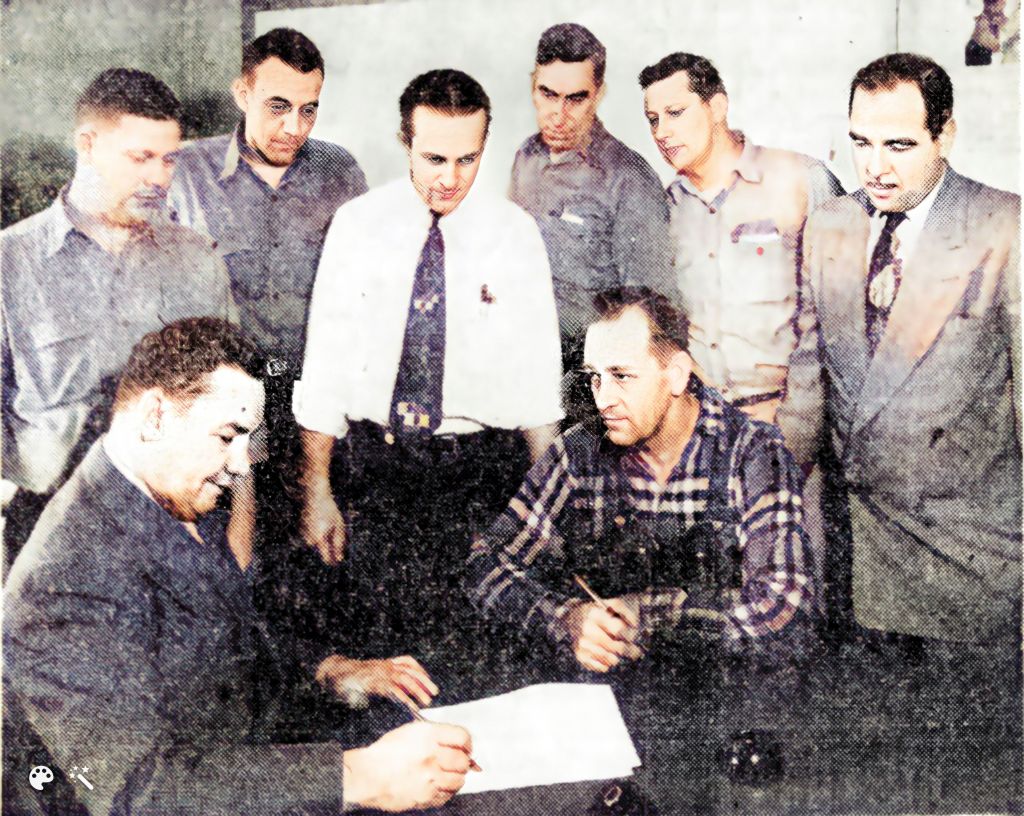
UAW Local 1164 president Clyde Wheatfill is seated (right) with works manager, Bernard Coleman signing the contract as union and company officials look on.
(Terre Haute Tribune-Star, February 3, 1952)
Two weeks after organizing. Leaders of Local 1164 and management agreed to an interim contract for 225 production employees at the pilot plant. The contract outlined and secured union fees, a complaint procedure, six paid holidays for union employees, and yearly wage increase increments. Employees would earn a one-cent hourly raise for each $1.14 adjustment to the cost of living. The contract also secured workers a four-cent raise per hour each year.
The union contract was approved and signed on February 8, 1952. However, by April the union canceled the contract and wanted to renegotiate. Local 1164 and Allis-Chalmers were at an impasse. State and Federal labor conciliators intervened to try and help the company and union hammer out a new contract. The union president, Clyde Wheatfill, set May 7 at midnight as the deadline for a new contract to be signed. If the union’s demands were not met by the deadline, workers would go on strike.
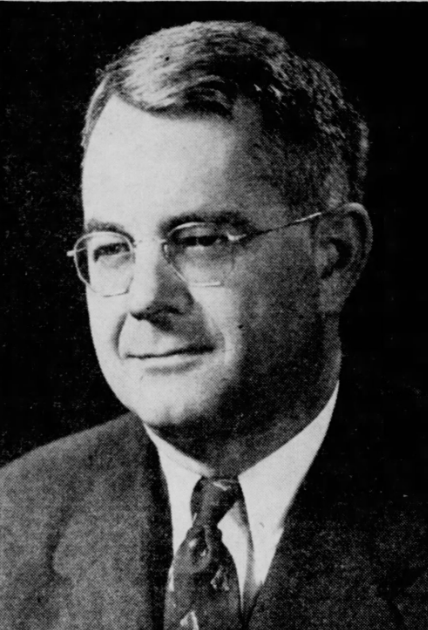
Martin Carson, Allis-Chalmers Terre Haute Works General Manager 1951-1955
(Terre Haute Tribune, May 10, 1951)
With no new agreeable contract, 350 production workers called a strike on May 7, 1952. Picket lines were set up outside of the pilot plant and at the construction site of the new facility. Allis-Chalmers’ Martin Carson, general manager of the Terre Haute Works, expressed his bewilderment with the strike vote. “The contract offered the bargaining committee of the union contains benefits, comparable to those accepted by other UAW-CIO unions in the Allis-Chalmers family, which have been praised by union leaders,” Martin said.
Tensions flared as Allis-Chalmers and the union dug in for a fight. Allis-Chalmers charged the union with interference with the defense effort and illegal picketing at the main plant, which was still under construction. It asserted that the union’s certification by the National Labor Relation Board only pertained to production workers at the pilot plant and not the main facility. Carson stated that picketing at the main plant was interfering with construction progress. Any delay in the new production facility, he said, would “cause a delay in supplying jet aircraft that are badly needed to combat Red aircraft activities in North Korea.”
Local 1164 president Clyde Wheatfill fired back and accused Allis-Chalmers of “striking against the employees.” He stated that the union was willing and ready to meet with the company to discuss the wages and other provisions of the contract. Union workers were upset with Allis-Chalmers for not paying production workers the same as other workers in the industry. Allis-Chalmers noted that their wages were based on the wage scale study done in the area. Both sides went back and forth accusing the other of not wanting to negotiate.
While the verbal punches flew, soon the strike became physical. UAW representative Frank Bartee allegedly struck Richard Jones, the company’s labor relation supervisor, as he tried to cross the picket line with his vehicle into the pilot plant. Another instance of violence occurred when a shop foreman was said to have run his car through the picket line and injured a striking worker. Wheatfill reassured the public that all picketing by Local 1164 was peaceful. “Any report of violence is denied,” he said. Allis-Chalmers refuted the union’s claim of peaceful picketing. It alleged that the on-strike worker struck by the vehicle was a result of obstructing the highway and that other members of the picket line were unlawfully obstructing the entrance to the plant.
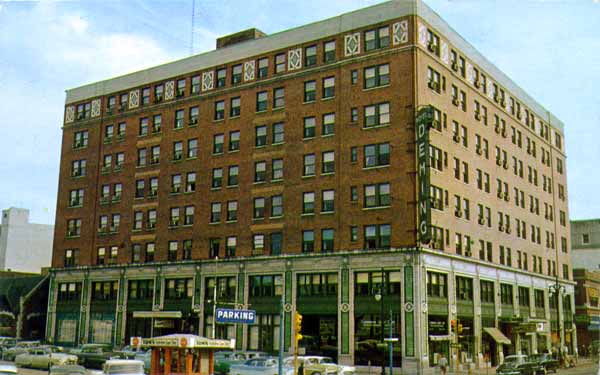
Hotel Deming was the site of company & union negotiations
Two weeks into the strike, both parties agreed to meet and resume negotiations on an updated contract. The first of many bargaining sessions was held at the Hotel Deming in downtown Terre Haute on May 22, 1952. Conciliators from the state and federal governments joined the negotiations, but no agreement was made. The strike continued, and an uneasiness hung over the city of Terre Haute.
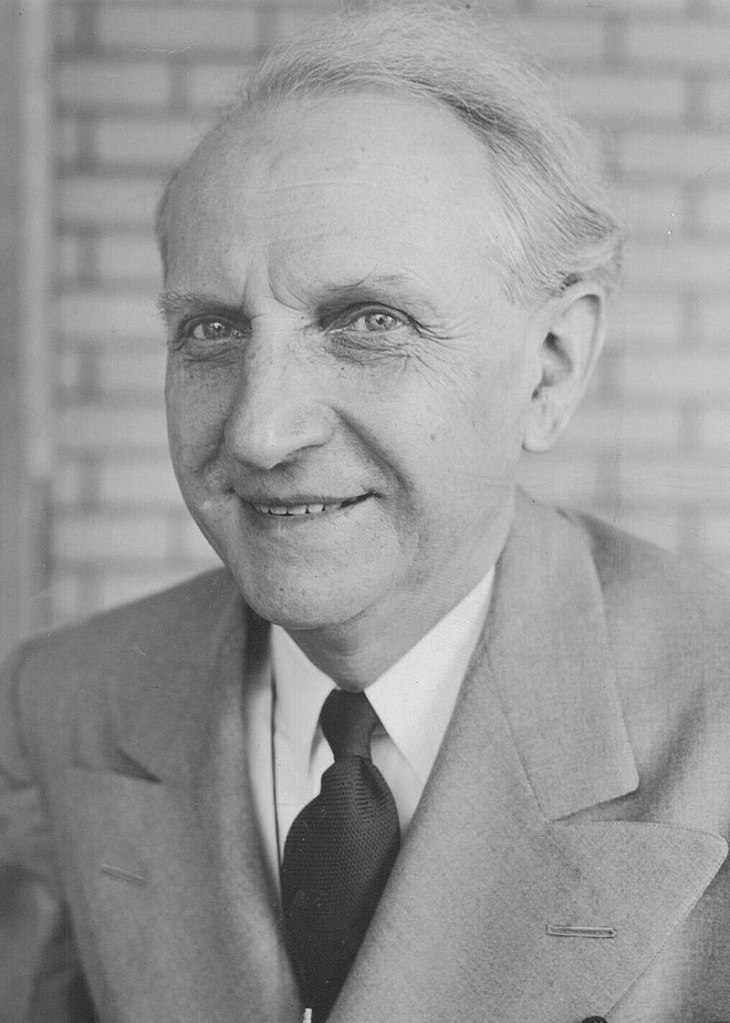
Governor Henry F. Schricker
(WIkicommons)
By the end of May, the Air Force began to express concern that the strike held up the orders for jet engine parts. If negotiations did not resume and an agreement could be made soon, a new supplier for the vital parts might be sought out. This new level of seriousness got the attention of Governor Henry Schricker. Governor Schricker requested a meeting with representatives from the company and union at his office in Indianapolis and urged both sides to settle their differences–even offering to form an arbitration committee to settle the strike.
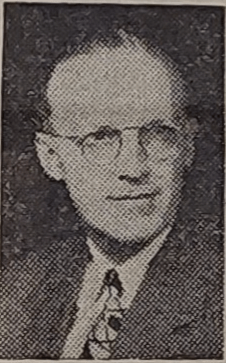
Raymond H. Berndt, UAW Regional Director
(United Automobile Worker, September 1952)
Negotiations resumed back in Terre Haute in the first week of June–one month into the strike. Bernard Coleman, works manager, headed the company’s negotiating committee, while UAW-CIO Regional Director Raymond Berndt and International Representative Frank Bartree led the union’s committee for negotiations.
Raymond Berndt was an important figure in the UAW-CIO fight for workers. His career started his rise as an employee at the Studebaker auto factory in South Bend, Indiana. There he was among the first workers to join the AFL labor union organized in that plant, which later transitioned to the UAW becoming Local 5. He worked his way up the ranks to become president of the local in 1944. He continued moving up when he was elected director of UAW Region 3 encompassing Indiana and Kentucky in 1947–a post he held until 1972. Berndt worked hard to advocate for workers and was politically active in getting labor-friendly politicians elected.
As talks resumed, the union submitted its counter proposal to Allis-Chalmers. Berndt said the strike was called in repudiation of provisions included in the contract and on the issue of wages. This left executives of Allis-Chalmers dumbfounded. They accused Berndt of “lack in good faith of bargaining” as contracts with other locals with the same provisions were agreed to by the UAW. Additionally, the company felt that the wages were comparable to the other industry in the area per the wage study done. The union argued that the wages were not in line with workers in the aircraft industry.
Talks proceed sluggishly, and the papers reported the back and forth and often stalled progress. Violence continued to be reported on the picket lines. About 100 striking employees prevented workers from entering the plant–including the works manager. Others found their windshields broken and sugar poured into their fuel tanks. Allis-Chalmers alleged that there was a breakdown in local law enforcement in not preventing illegal strike activity. Pickets eased upon a request made from the governor’s office.
With over a month into the strike, the Air Force was very interested in seeing the conflict resolved and production back in full swing. Military officials went as far as threatening to pull the plug on the contract altogether. Suddenly, the whole prospect of Allis-Chalmers breathing new life into the local economy was on the line. Terre Haute saw this facility and these types of jobs as a godsend for a community struggling to transition and broaden its job market.
A citizens committee, comprised of local business people and led by Mayor Ralph Tucker, was organized to try and bring a favorable end to the dispute. After all, thousands of jobs and millions of dollars were on the line. Other civic and commercial associations pleaded with the two combatants to come to an agreement and save the operation. Allis-Chalmers also issued an ultimatum to the union to come to the table to negotiate in good faith, or the company would end the construction project, and take the loss as a write-off.
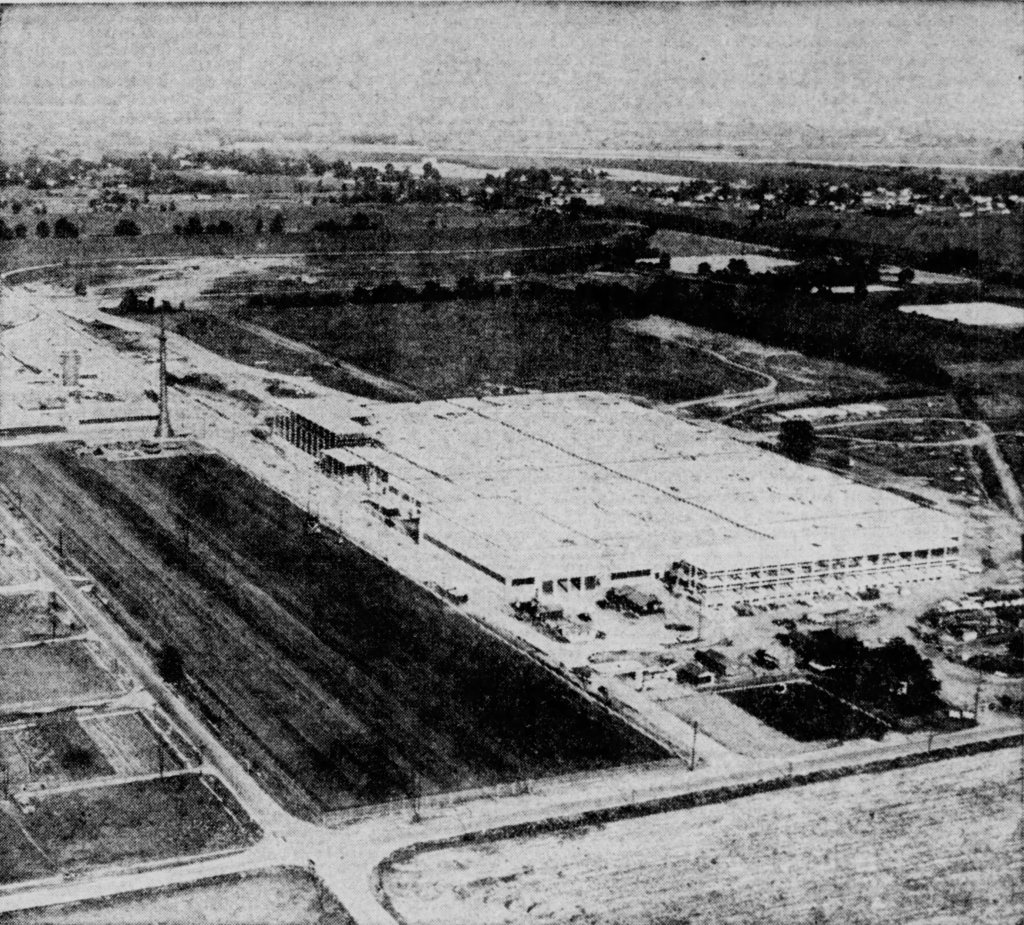
Construction of the Terre Haute Works at a standstill
(Terre Haute Tribune, July 8, 1952)
The strike dragged on with no settlement in sight. On Friday, June 20, 1952, construction on the new facility came to a halt with only 58 percent of the plant completed. Even more alarming was that the Air Force tagged 194 out of 378 total machining tools on loan to be removed. Military personnel would be on-site to disassemble and ship the tools elsewhere if an agreement could not be reached by Tuesday, July 8. Citizens, civic groups, and local politicians pleaded with the union and company to negotiate a favorable end to the strike to avoid losing the military contract.
Union representatives and company officials had a long holiday weekend to settle the dispute. The local newspapers published an ominous hourly countdown to M-Day (Moving Day) when the Air Force would remove tools from the pilot plant if a settlement couldn’t be reached. Hopes that a deal had finally been reached were dashed when negotiations apparently fell through over the issue of wages. On Tuesday, July 8, 1952, with the two sides still in a deadlock, the Air Force sent its personnel into the pilot plant on Wabash Avenue to begin disassembling the machinery.
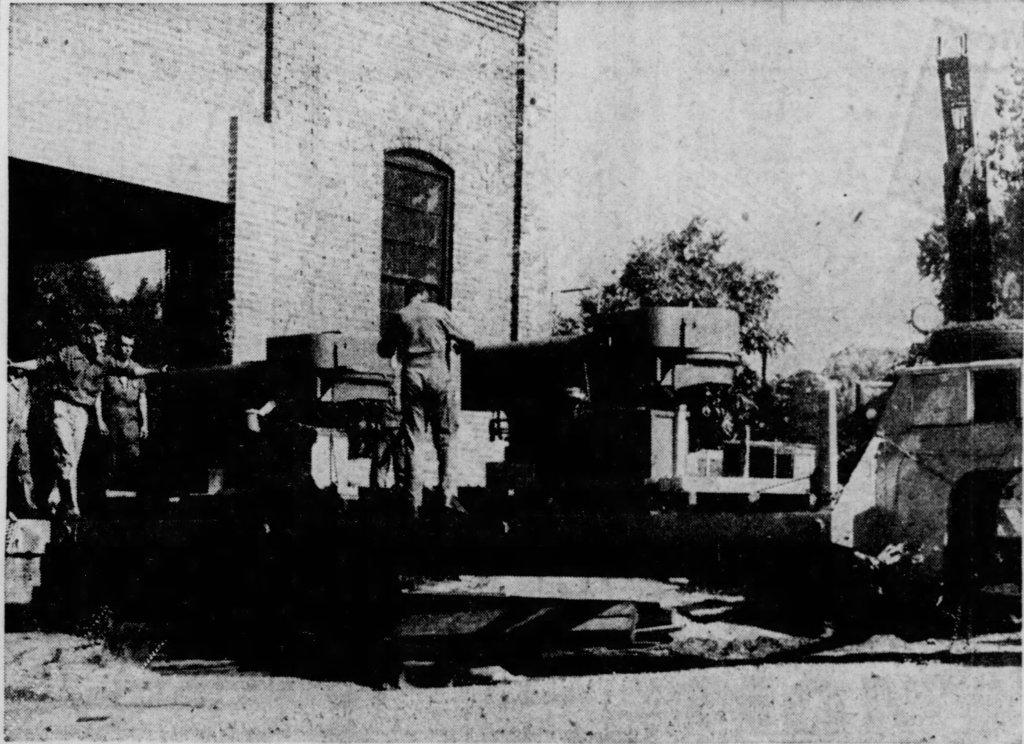
Air Force removing machinery from Allis-Chalmers Pilot Plant
(Terre Haute Tribune-Star, July 13, 1952)
As mechanics worked to pack up important defense tools and machinery–bound for plants owned by Wright Aeronautics and General Motors–the strike carried on. Both sides continued to point the finger at the other for not bargaining in good faith. Meanwhile, the fate of jobs, the plant’s completion, and the economic prosperity that could follow a company like ALLIS-CHALMERS into Terre Haute seemed to hang in the balance. What many could not foresee is that the situation was about to spiral into an all-out battle on the streets of Terre Haute.
Next: Part III “Battle of the Unions and Resolution”
References
(Second Part)
“CIO Union Wins Vote at A-C Plant.” The Terre Haute Tribune, January 19, 1952. Newspapers.com. https://www.newspapers.com/image/87428878/?terms=United%20Auto%20Workers&match=1&clipping_id=112345061.
“A-C Negotiations Still Underway.” The Terre Haute Tribune, May 5, 1952. Newspapers.com. https://www.newspapers.com/image/89156589/?terms=Allis%20Chalmers&match=1.
“A-C Plant Here Idle Thursday.” The Terre Haute Tribune, May 8, 1952. Newspapers.com. https://www.newspapers.com/image/89157369/?terms=Allis%20Chalmers&match=1.
“Heads New Plant Here.” The Terre Haute Tribune, May 10, 1951. Newspapers.com. https://www.newspapers.com/image/86988450/?terms=Martin%20Carson&match=1.
“Ask Picketing New Plant End.” The Terre Haute Tribune, May 9, 1952. Newspapers.com. https://www.newspapers.com/image/89158065/?terms=Allis%20Chalmers&match=1&clipping_id=89779481.
“Governor Has Strike Detail.” The Terre Haute Tribune, May 13, 1952. Newspapers.com.
https://www.newspapers.com/image/89160066/?terms=Allis%20Chalmers&match=1
“Union Statement in A-C Controversy.” The Terre Haute Tribune, May 17, 1952. Newspapers.com. https://www.newspapers.com/image/74662351/?terms=Allis%20Chalmers&match=1&clipping_id=89780339
“Statement by A-C Company.” The Terre Haute Tribune, May 19, 1952. Newspapers.com. https://www.newspapers.com/image/74664096/?terms=Allis%20Chalmers&match=1.
“Statement Today on Allis-Chalmers.” The Terre Haute Tribune, May 20, 1952. Newspapers.com. https://www.newspapers.com/image/74664096/?terms=Allis%20Chalmers&match=1.
“Co. Challenging A-C Picketing.” The Terre Haute Tribune, May 21, 1952. Newspapers.com. https://www.newspapers.com/image/74664310/?clipping_id=89780866.
“Allis-Chalmers, Union Resume Negotiations.” The Terre Haute Tribune, May 22, 1952. Newspapers.com. https://www.newspapers.com/image/74664413/?terms=Allis%20Chalmers&match=1.
“A-C, Union Talks Stalemated Again.” The Terre Haute Tribune, May 23, 1952. Newspapers.com. https://www.newspapers.com/image/74664617/?terms=Allis%20Chalmers&match=1.
“Gov. Schricker Asks Conference on A-C Stricke.” The Terre Haute Tribune, May 29, 1952. Newspapers.com. https://www.newspapers.com/image/74667180/.
“Negotiations on A-C Strike Resumed.” The Terre Haute Tribune, June 3, 1952. Newspapers.com. https://www.newspapers.com/image/85065301/?terms=Allis%20Chalmers&match=1.
“A-C Strike has Firm Puzzled.” The Terre Haute Tribune, June 4, 1952. Newspapers.com. https://www.newspapers.com/image/85065321/.
“A-C Strikers Will Hold Mass Meeting Tonight.” The Terre Haute Tribune, June 11, 1952. Newspapers.com. https://www.newspapers.com/image/85065545/?terms=Allis&match=1.
“Pickets Block A-C Employes.” The Terre Haute Tribune, June 12, 1952. Newspapers.com. https://www.newspapers.com/image/85065565/.
“Reduce Pickets; A-C and Union Resume Talks.” The Terre Haute Tribune, June 13, 1952. Newspapers.com. https://www.newspapers.com/image/85065595/?terms=Allis&match=1.
“A-C Negotiations Underway.” The Terre Haute Tribune, June 16, 1952. Newspapers.com. https://www.newspapers.com/image/85065731/?terms=Allis&match=1.
“New Effort to Save A-C Plant.” The Terre Haute Tribune, June 18, 1952. Newspapers.com. https://www.newspapers.com/image/85065765/.
“Strike Talks Carrying On.” The Terre Haute Tribune, June 19, 1952. Newspapers.com. https://www.newspapers.com/image/85065785/?terms=Allis&match=1.
“700 A-C Construction Men Laid Off.” The Terre Haute Tribune, June 21, 1952. Newspapers.com. https://www.newspapers.com/image/85065837/?terms=Allis&match=1.
“Raymond H. Berndt Sr.” South Bend Tribune, September 3, 2004. Newspapers.com. https://www.newspapers.com/image/511412722/.
“Progress Made in A-C, Union Negotiations.” Terre Haute Tribune, July 2, 1952. Newspapers.com. https://www.newspapers.com/image/89211386/.
“Failure To Agree Today May Bring End to A-C, Union Negotiations.” Terre Haute Tribune, July 4, 1952. Newspapers.com. https://www.newspapers.com/image/89212308/.
“A-C Deadline 48 Hours Away With No Settlement In Sight.” Terre Haute Tribune, July 6, 1952. Newspapers.com. https://www.newspapers.com/image/89213053/.
“A-C Negotiators Begin Race Against Time to Settle Strike.” Terre Haute Tribune, July 7, 1952. Newspapers.com. https://www.newspapers.com/image/89215085/.
“A-C Union Continues Strike: Removal Of Tools By Air Force Men Reported Under Way.” Terre Haute Tribune, July 8, 1952. Newspapers.com. https://www.newspapers.com/image/89215362/.

 The Weekend Historian