

I’ve recently taken an interest in culinary history. I suppose I can blame the social media algorithms for that. Two years ago, I started my sourdough journey after watching way too many reels about starter cultures. Last summer, I began making my own ginger bug sodas, and the family has been loving them.
My latest amusement? Making my own butter.
Maybe it’s just me embracing my Wisconsin upbringing—the cheese curd obsession is real. After all, I did grow up on a dairy farm. I’ve always been fascinated by the way things used to be done. I like knowing where my food comes from. I also enjoy understanding how it’s made. Somewhere in the middle of those interests is where old culinary traditions start to feel new again.
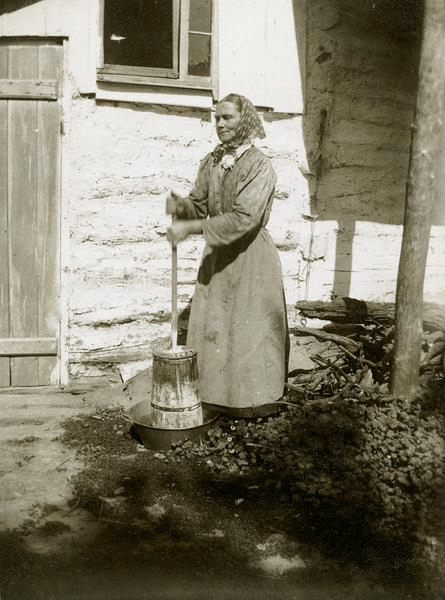
(Wisconsin Historical Society)
It’s easy for us to take something as simple as butter for granted. The next time you’re at the grocery store, wander down the dairy aisle and take a moment to look. There’s a whole wall of creamy, rich, yellow goodness and all its possibilities. Butter comes in blocks, rolls, tubs, and, of course, sticks. Just grab what you need and be on your way.
And don’t even think about those butter impostors. Margarine was once practically contraband in Dairyland. Around here, everything really is better with butter.
Before refrigeration and the modern grocery store, butter was either made at home or produced locally. Making butter was simply part of everyday life. Butter churns came in all shapes and sizes. The simplest were the dasher-style churns. These were often made of wood or ceramic. A wooden plunger—called a dasher—was moved up and down. It had a disc or a cross at the end. This action agitated the cream until the fat separated and formed butter.
As time went on and technology improved, new designs appeared. Barrel churns, rocker churns, and paddle churns made the process easier and more efficient. Eventually, electric churns entered the picture as well.
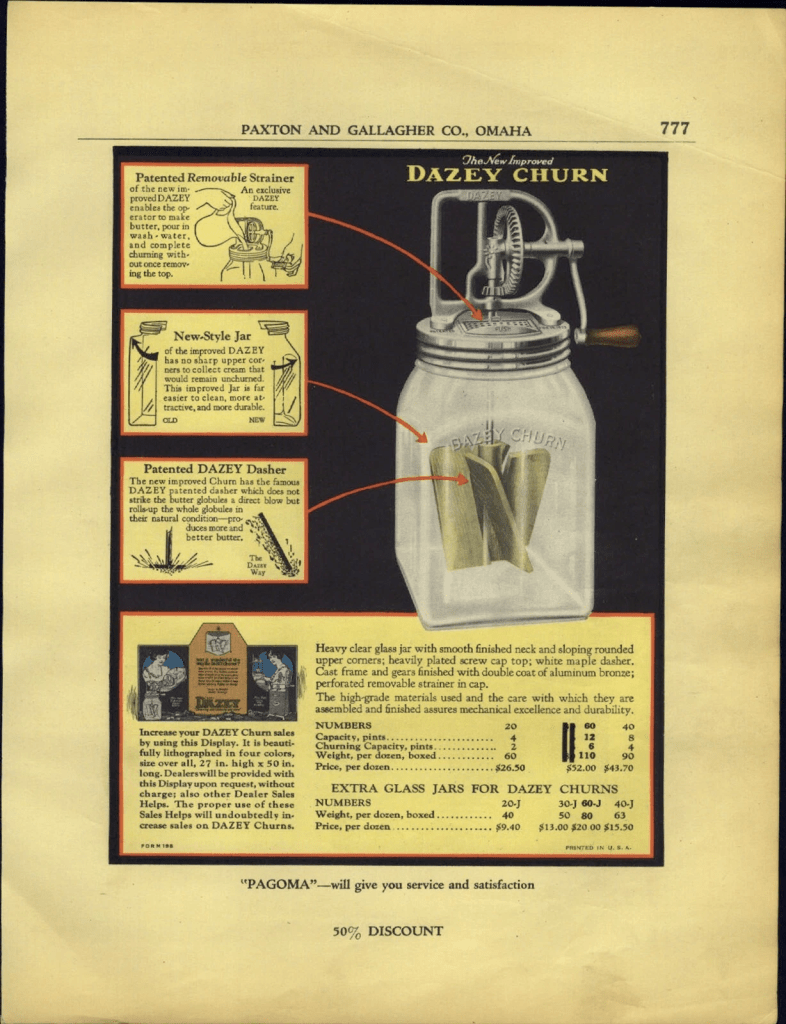
I made the decision to try making butter myself. I knew I wanted to use an old churn. I preferred it over buying something modern. I found a Dazey #40 glass jar churn. It was made by the Dazey Butter Churn & Manufacturing Company out of St. Louis. I picked mine up on Facebook Marketplace just a few minutes down the road.
After bringing it home, I ran the glass jar through the dishwasher. I scrubbed the paddles with soap and vinegar. This got everything cleaned up. Then I filled the jar with a quart of heavy whipping cream and got to work turning the crank.
The Farm Collector magazine has a great article about Dazey churns. It also covers the company that made them. You may find it interesting if you’re interested in digging deeper into their history.
After about twenty minutes of churning, I suddenly had a hunk of butter flopping around in the jar. I drained off the buttermilk, rinsed and worked the butter, then shaped and packaged it. The first batch I left unsalted, and we’ve been using that for baking. The second batch I salted and shaped into a brick for spreading on bread.
Of course, nothing went to waste. I saved the buttermilk and used it to make sourdough pancakes for a family breakfast. They turned out pretty fantastic.
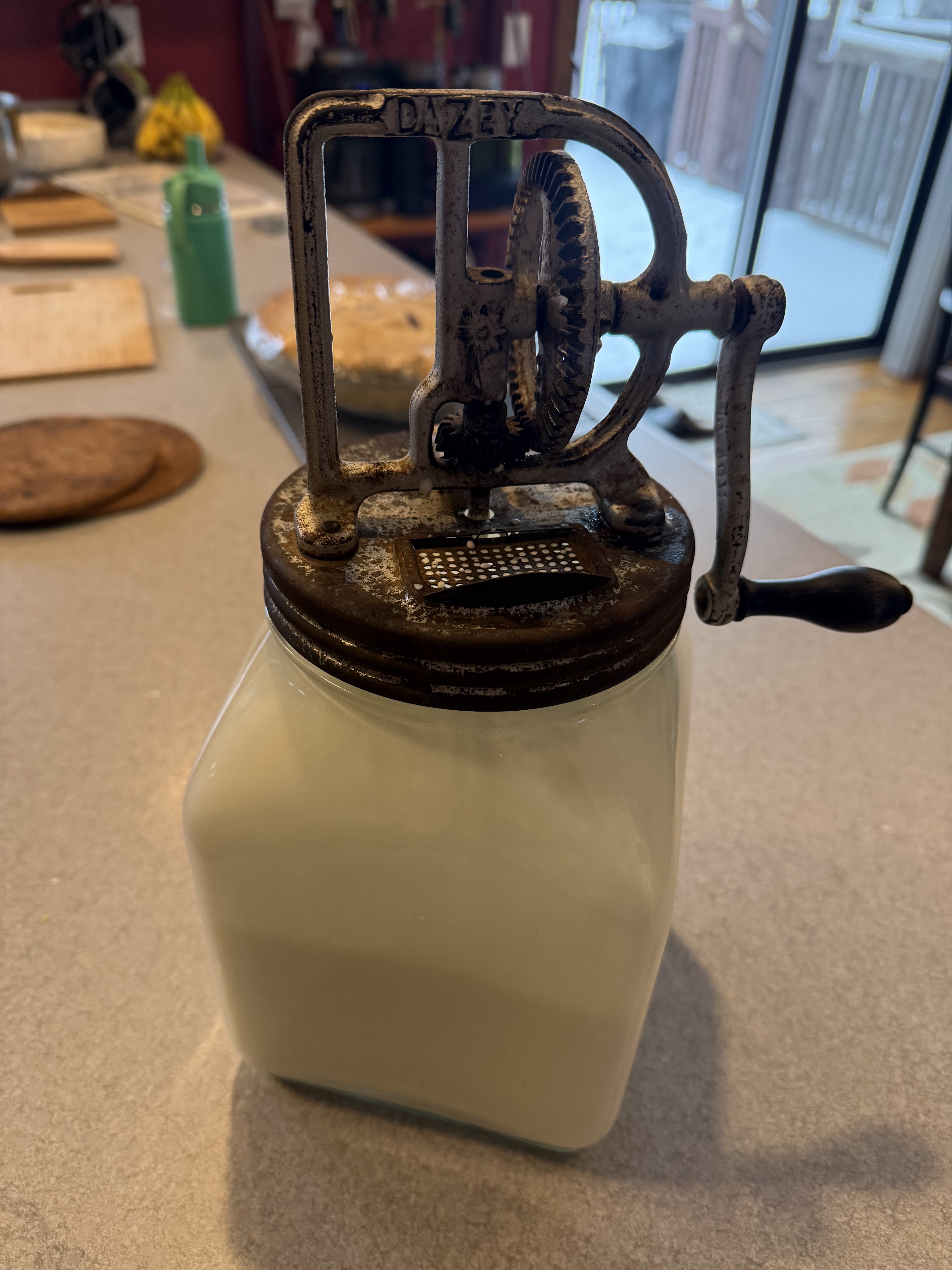
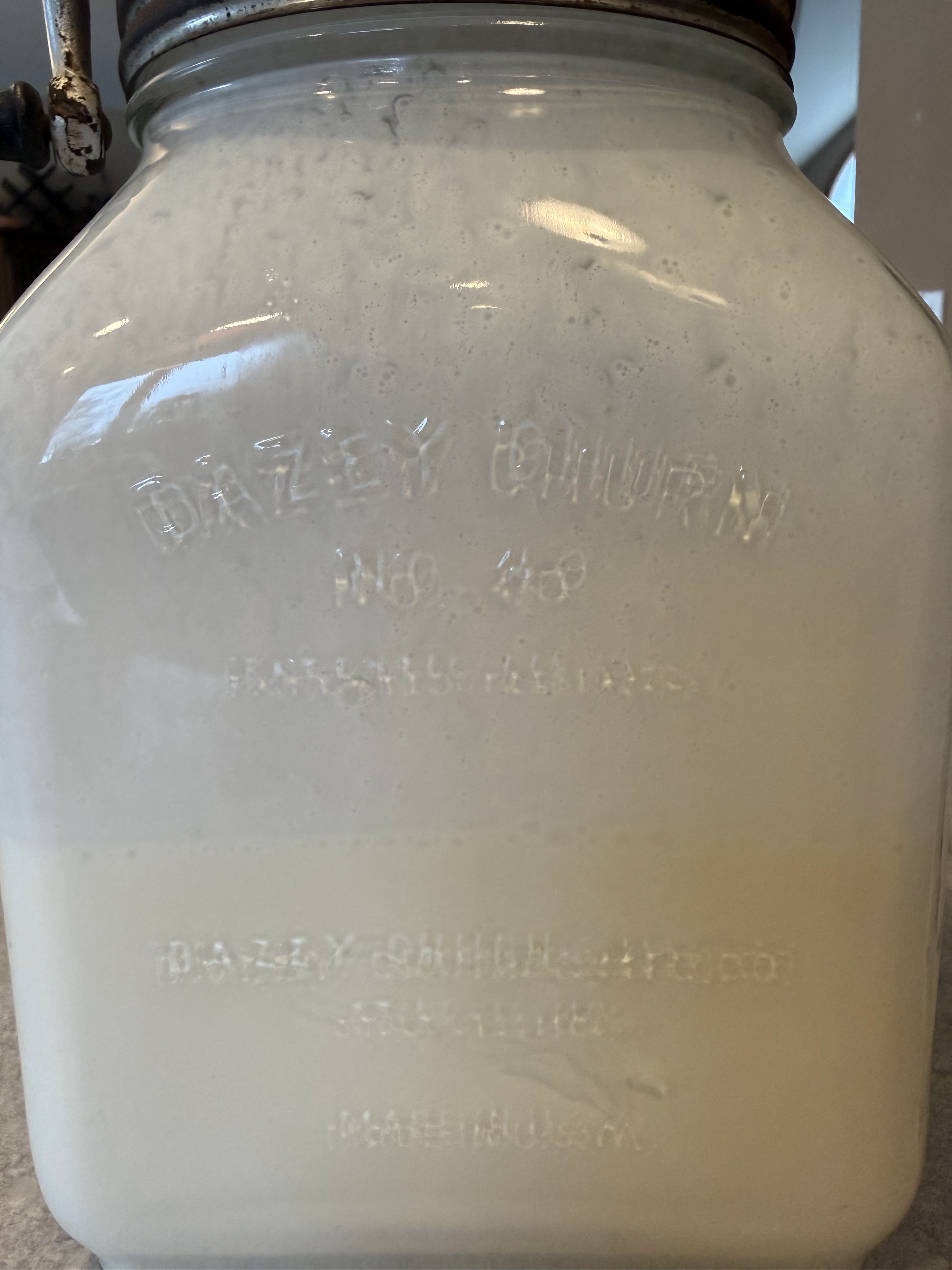
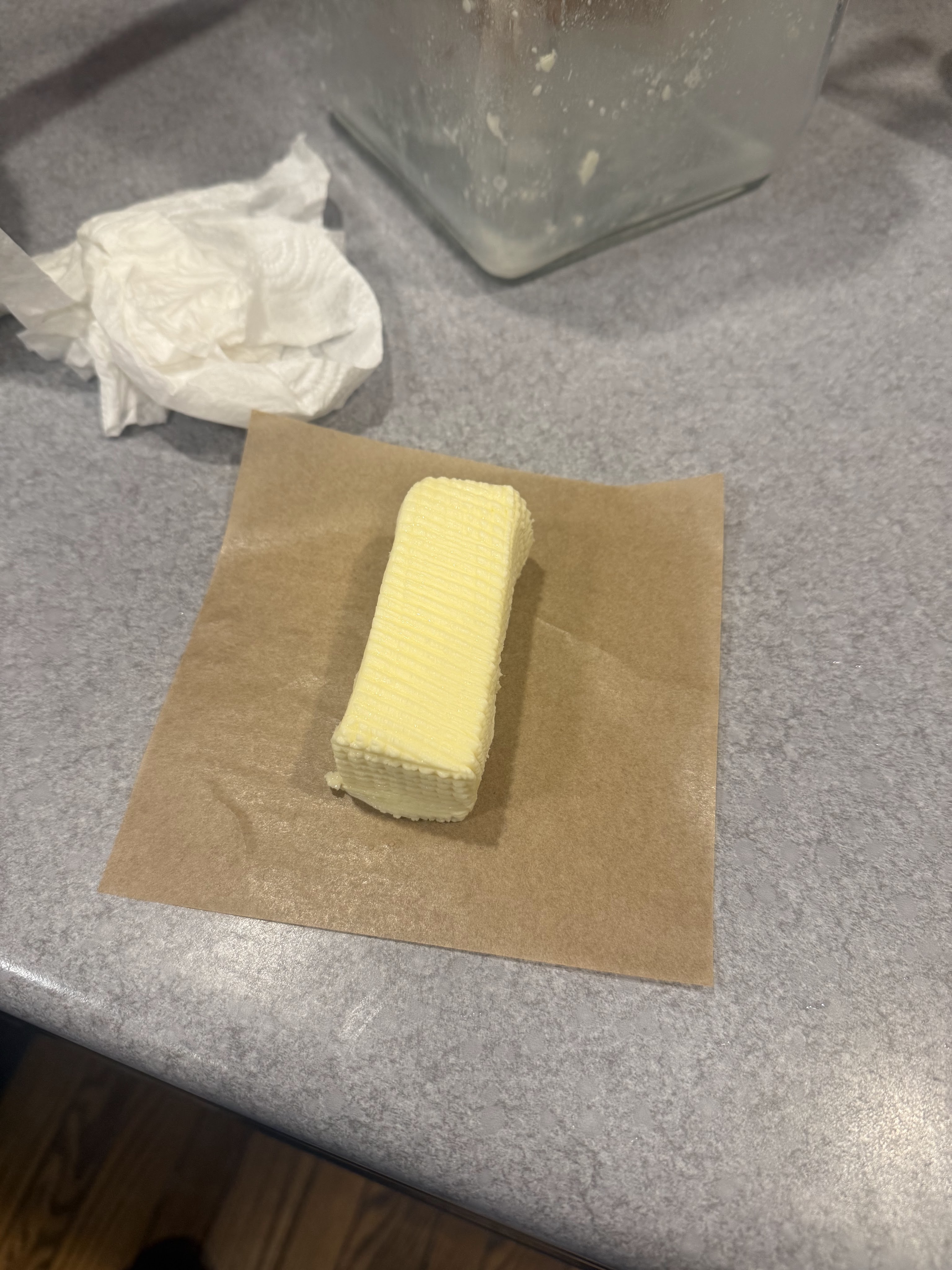
So there you have it. This old butter churn is still capable of whipping out some excellent butter. Not bad for a piece of kitchen history.
Have you ever tried making homemade butter? What was your experience? Do you use a churn or the old jar-shaking method? Let me know in the comments.

 The Weekend Historian